How Correct Cable Cleat Installation Prevents Cable Movement
- Nasco Corp
- Mar 13
- 2 min read


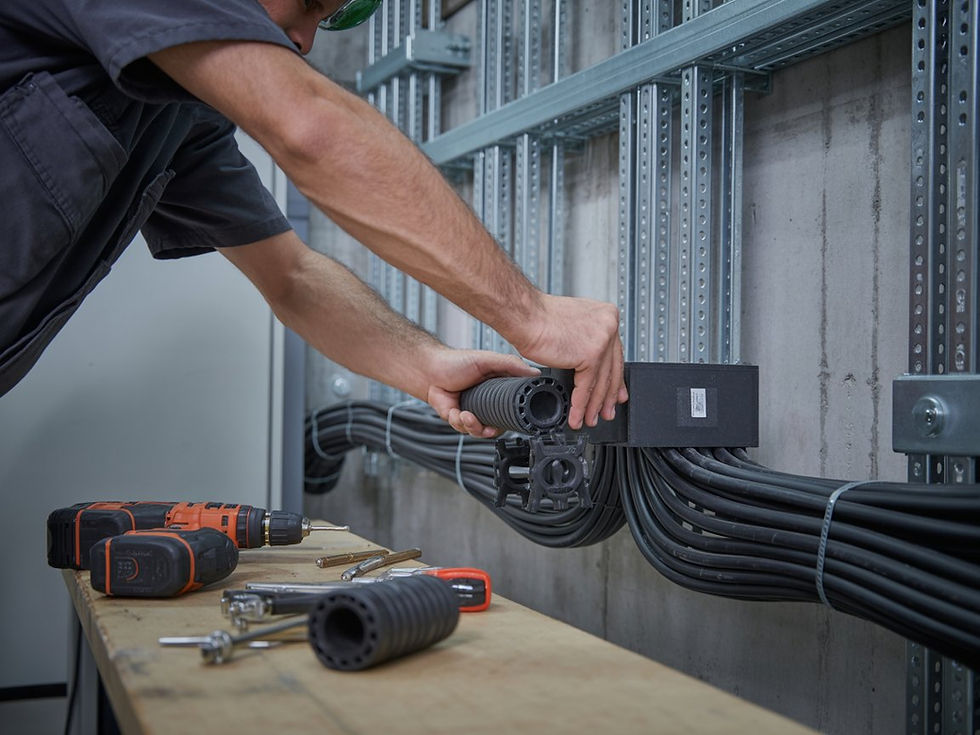
Correct Cable Cleat Installation prevents cable movement by securely fixing Electrical Cable Cleats to trays or supports. This restrains cables against electromagnetic forces, thermal expansion, and vibrations—stopping violent whipping in faults.
Electrical Cable Cleats: The Hidden Safety Component in Power Infrastructure
Electrical Cable Cleats are mechanical fixings rated to IEC 61914. They hold cables during short circuits, preventing insulation damage, fires, and outages.
Top Advantages of Using Cable Cleats in Cable Tray Systems
Restrain axial, lateral, and torsional forces
Reduce load on terminations
Control thermal expansion
Simplify maintenance
Comply with IEC 61914 (up to 200 kA)
Outperform cable ties
Read this also...Top Advantages of Using Cable Cleats in Cable Tray Systems
Top Benefits of Installing High Voltage Cable Cleats in Substations
Prevent lashing in 11–33 kV systems
Reduce downtime significantly
Avoid costly rework
Improve personnel safety near high-fault currents
Resist corrosion, UV, impact
Meet seismic and insurance rules
Proper Cable Cleat Installation eliminates cable movement, boosts reliability, and enhances safety. Use IEC-rated Electrical Cable Cleats and follow spacing guidelines.
CTA: Install certified Cable Cleats for Cable Tray now—consult an engineer.
FAQs
What are Electrical Cable Cleats?
Fixings that secure cables to trays, stopping movement in faults.
How does Cable Cleat Installation prevent short-circuit damage?
Restrains cables in milliseconds against huge magnetic forces.
Why use High Voltage Cable Cleats in substations?
They cut downtime and meet IEC 61914 for HV systems.
What are benefits of Cable Cleats for Cable Tray?
Better restraint, lower maintenance, full compliance.
Can cable ties replace Cable Cleats?
No—ties fail in high-fault tests; cleats hold.
How to determine Cable Cleat Installation spacing?
Follow manufacturer charts based on fault current and cable size.
Do High Voltage Cable Cleats meet international standards?
Yes—IEC 61914 compliant for load, impact, corrosion.


Comments