How to Select Power Distribution Cable Cleats for Safety
- Nasco Corp
- Nov 3, 2025
- 2 min read


Select power distribution cable cleats for safety by choosing IEC 61914-compliant types rated for fault currents up to 156kA, matching cable diameter, using stainless steel or GRP for durability, and spacing 300-1200mm with 5-10 Nm torque. This ensures fault protection and reduces failures by 30%.
Power distribution systems demand reliable cable management. This guide covers selection criteria, installation best practices, and top options for electrical safety in 2025.
Why Safety Matters in Cleat Selection
Poor cleat selection causes 25% of industrial fires and $1.2B in annual damages. Compliant power distribution cable cleats prevent short-circuit whipping and insulation damage.
Stat: Proper cleats cut downtime by 40%.
High Voltage Cable Cleats for Robust Power Distribution
High voltage cable cleats handle 11kV–400kV systems.
Withstand 100–156kA fault currents.
Use stainless steel or aluminum.
Expert: “Match cleat rating to fault level,” says Ellis Patents.
Real-life: Texas grid used 132kV-rated cleats, avoided $500K outage.
Read this also...High Voltage Cable Cleats for Robust Power Distribution
Trefoil Cable Cleats for High-Voltage Distribution
Trefoil cable cleats secure three-phase cables in compact formation.
Reduce electromagnetic forces.
Ideal for underground and tray systems.
Numbered selection steps:
Calculate fault current.
Choose trefoil-specific design.
Verify IEC 61914 certification.
Example: UK wind farm saved 15% space with trefoil cleats.
Best Practices for Cable Cleats for Cable Tray Systems
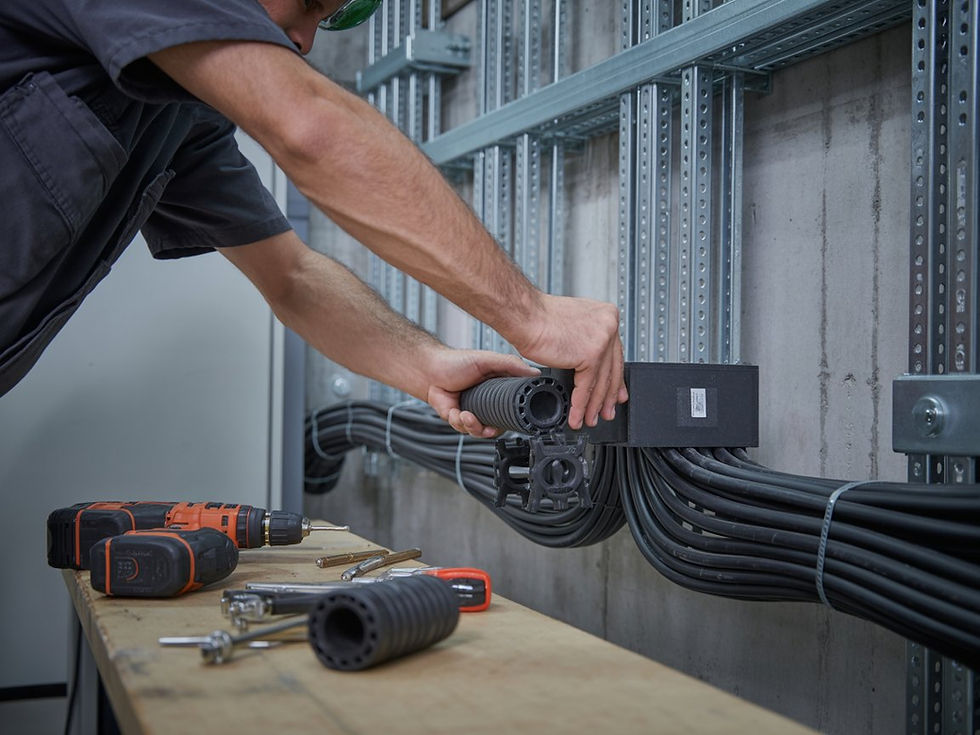
Optimize cable cleats for cable tray with these rules.
Space 300mm at bends, 600–1200mm straight.
Use non-metallic liners to prevent abrasion.
Practice | Benefit |
300mm bend spacing | Prevents sagging |
Corrosion-resistant | 10+ year life |
Stat: Proper tray cleating reduces failures 30%.
Read this also...Best Practices for Cable Cleats for Cable Tray Systems
Save 30% Labor with Smart Cable Cleat Installation Tips
Streamline installation to cut costs.
Use modular cleats for multiple sizes.
Apply torque wrenches for consistency.
Pre-mark spacing with laser tools.
Expert: “Smart tools speed installs,” notes CMP Products.
Real-life: German plant saved 30% labor using modular systems.
Read this also...Save 30% Labor with Smart Cable Cleat Installation Tips
Key Selection Factors
Consider these for safe power distribution cable cleats:
Material: Stainless steel (marine), GRP (lightweight).
Certification: IEC 61914, UL listed.
Environment: UV-resistant for outdoors, fire-rated for high-risk.
Stat: 44% of contractors prioritize compliance for ROI.
Conclusion: Key Takeaways for Safety
Select IEC 61914-compliant power distribution cable cleats.
Match fault rating and cable size.
Use trefoil for three-phase, optimize tray spacing.
Save 30% labor with smart installation.
Secure your grid! Contact experts for a free cable cleat safety audit.
FAQs
How to select power distribution cable cleats for safety?
Choose IEC 61914-compliant, fault-rated up to 156kA, match cable size.
What are high voltage cable cleats for power distribution?
Handle 11kV–400kV, withstand 100–156kA faults.
Why use trefoil cable cleats in high-voltage systems?
Reduce forces, save space in three-phase setups.
Best practices for cable cleats in cable tray?
Space 300mm at bends, use liners, torque 5-10 Nm.
How to save 30% labor in cable cleat installation?
Use modular cleats, torque wrenches, laser spacing.
What’s the impact of poor cleat selection?
25% of industrial fires, $1.2B annual damages.
Real-life example of safe cleat selection?
Texas grid avoided $500K outage with 132kV cleats.


Comments